J.M. NORTHUP's BLOG

Showing posts with label poetry. Show all posts

Wednesday, January 27, 2021

Some Writing Is Music To Our Ears!

 FOLK MUSIC ICON NOMINATED
FOR LIFETIME ACHIEVEMENT AWARD


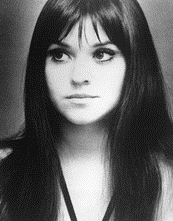
It is 1 am on Saturday August 16th, 1969 and Melanie Safka, a folk singer at the tender age of 22 years old moves herself onto the stage at the Woodstock Music Festival to perform songs echoing love, beauty and freedom.  Following a one-hour performance by Ravi Shankar, playing her music in front of 400,000 flower children would only be one precious moment in her music career.  Three years later and one recording contract later, Melanie Safka would ultimately record two singles that would take her into the mainstream music scene,  “Lay Down (Candles In The Rain)”, which would reach number six on Billboard and “Brand New Key”, which would become number one on the Billboard Hot 100 and become an international bestselling single reaching No. 1 in Canada and Australia and No. 4 on the UK Singles Chart.   


Who knew that over 50 years later, Melanie’s trademark of success and songs would still be relevant and vital to society, she certainly could never have imagined that!  Roll forward to 2021 and Ms. Safka’s journey continues.   The influential singer-songwriter’s legacy now moves forward as she has been nominated for a Lifetime Achievement Award given by Folk Alliance International in conjunction with the 2021 International Folk Music Awards.   Influential and inspiring, this Award will be given to one individual with competition stemming from key influencers both living and those in legacy.  The award, voted on by members of the Folk Alliance International is given and recognized by folk music industry leaders, legends, unsung heroes, and rising talent.  Although the award has not been won as of yet, the sheer magnitude of being nominated is a testament to Melanie’s longevity and success as a singer-songwriter. 

More information about the award can be found at:
Announcing the nominees for the 2021 International Folk Music Awards - Folk Alliance International 

To celebrate the revitalized success Melanie is having, there will be a livestream concert event on January 30th and you can join the concert through the following link:
https://www.facebook.com/events/340082417061967


conversation

ABOUT MELANIE:

Melanie landed in the New York City music and radio scene in the late 1960’s. Her first single, Beautiful People immediately became a turntable hit. Her first tour began with an impressive 40-day run of shows at Paris’world-famous L’Olympia Theater at the invitation of Bruno Coquatrix.  In the years to come, she would entertain millions: at an Aquarian Exposition (the 1969 Woodstock Music Festival), at Carnegie Hall, the Isle of Wight and Glastonbury music festivals, the Sydney Opera House, the South Korean DMZ, the Theatre Royal Drury Lane, the Royal Albert Hall, and many many more theatres, halls, and beloved music clubs around the globe.

Melanie launched Neighborhood Records, making her the first American woman to open a mainstream record label, she has recorded over 20 chart hits and many have been re-recorded.  Melanie received an Emmy after composing lyrics for the theme song of the hit television series Beauty and the Beast.  “What Have They Done To My Song Ma” was re-recorded by Ray Charles with the Count Basie Band.  Nina Simone delivered a remarkable rendition as well.  “(Lay Down) Candles in the Rain” was re-recorded by Mott the Hoople on their 1971 album Wildlife.  Meredith Brooks and Queen Latifah later recorded the anthem.  “Some Say (I Got Devil)”was re-recorded by Smith’s frontman Morrissey. These are only a few of the many performers who have re-recorded Melanie’s works.   She has always known her calling in life was to entertain.

Audiences have welcomed her to the stage for more than fifty years, and she continues to perform today.

More information about Melanie can be found at the following:

·       Website:   http://www.melaniesafka.com
·       Facebook:  https://www.facebook.com/therealmelaniesafka
·       Instagram:  https://www.instagram.com/p/CF5EEn7JdQP/?igshid=wbiuck74zr1o

Saturday, May 30, 2020

Author Josh De Lioncourt

My Interview with Josh De Lioncourt!

Josh with his sister's dog, Bella.
Thank you for taking the time to meet with me today.  I think my readers will enjoy getting to know you – I certainly have!
1.     The way we see ourselves is quite revealing.  Therefore, I always begin with the same question – please tell us how you’d describe yourself?
I tend to think of myself as a creative in general. Apart from writing stories, I write music, develop software, podcast, etc. I enjoy trying out new mediums for creating things; sometimes new formats stick for me, sometimes they don’t. Nearly everything circles back around to stories though, no matter what the medium is.
2.     Before we delve into your writing, I’d like to explore you as a person and reader.  I know you love J.K. Rowling’s Harry Potter series, you’re a trekkie, and you love coffee.  All good things 😊 Let’s discuss!
·        When did you first discover your love of literature?
o   I’ve loved reading for as long as I can remember. Some of my earliest memories are of Dr. Seuss books and the mini comics that came with the Masters of the Universe action figures I played with as a child. Around the age of six or so, I started reading The Hardy Boys, Nancy Drew, Mark Twain, and all sorts of other things. By the time I was twelve, I had discovered Stephen King and Ursula K Le Guin, and, not long after, Anne Rice.
➢    Who came first; the reader or the writer?
▪   I’m sure it was the reader, although the writer wasn’t far behind. I remembered acting out and telling stories into a cassette recorder as early as the age of five, and I remember drawing my own Inspector Clouzot comic book at some point before I lost my vision at the age of six.
➢    What author(s) or book(s) had the most influence on you, and why?
▪   A lot of authors have influenced my writing in various ways. Stephen King’s mastery of storytelling, Anne Rice’s vivid and beautifully descriptive prose, and J.K. Rowling’s whimsy have probably had the biggest impacts on my fiction specifically. That said, I’m a firm believer that writers always can find something new from one another, whether it’s what to do or what not to do. :)
➢    I know you love Stephen King.  What draws you to him?  Do you have a favorite book or series?
▪   I love almost everything King has written. His Dark Tower series is definitely my favorite, but in a way that is cheating, since The Dark Tower encompasses just about all of his writing in one way or another. The core Dark Tower books are such a magical blend of different genres (epic fantasy, sci-fi, western, etc), that they really drew me in. I love fantasy first and foremost, but I tend to especially enjoy books which blend elements that are not typically found together.
➢    Am I right to assume J.K. Rowling is one of you favorite writers?  What about her work speaks to you most – her style, the storytelling, the characters, the magic?
▪   I really enjoy Rowling’s work, both with the Harry Potter series and her current mystery novels. Her ability to tell stories that are both dark and whimsical is amazing—and that’s hard to do well. She walks that line masterfully. And, really, who doesn’t love Harry Potter?
·        Of the four houses in Harry Potter, why do you consider yourself to be a Ravenclaw?
o   I’m absolutely a Ravenclaw!
·        Are you a general fan of Star Trek franchise or do you follow a series?  If so, which do you prefer, and why?
o   I like most of the Star Trek franchise, but I’m primarily a fan of The Original Series. I’ve watched and enjoyed the various series to greater or lesser degrees. Controversially, I don’t particularly care for The Next Generation. I find its characters to be a bit flat, personally. Discovery, Voyager, and Enterprise all rank pretty highly for me as well.
➢    As a reader, have you read any of the Star Trek books – why or why not?
▪   I read tons of Trek novels in my teens, and still pick them up from time to time. I’d probably read more of them if they were more regularly produced as audiobooks. Audiobook releases of Star Trek novels tend to be sporadic.
➢    If you have, which do you recommend, and why?
▪   The very best Star Trek novel of all time, as far as I’m concerned, is The Pandora Principle by Carolyn Clowes. It explores the backstory of Saavik, who was featured prominently in the second and third Trek films. She’s half Vulcan, half Romulan, and her journey from desperate circumstances to the stellar Starfleet officer we see in the films is, to quote her teacher, Mr. Spock, fascinating. Apart from King, Rice, and Rowling, The Pandora Principle probably had quite an influence on how my writing has evolved. In the broadest of terms, Saavik’s characterization in that book probably laid the groundwork for the character of Emily Haven in my Dragon’s Brood Cycle series, although I hadn’t really thought about that until this moment.
·        COFFEE…  need I say more? 😊What a perfect companion for books!
o   I agree! In the last couple of years, I’ve begun roasting my own coffee beans, which is a fun hobby and, when it’s done right, tends to produce far better coffee than you can get any other way.
3.     Let’s talk about you as a writer.
·        What prompted you to become a writer, and how did that transition into being a published author?
o   I’ve been writing since I was quite young, telling stories into a cassette recorder based on Star Trek and Masters of the Universe. When I was in the fourth grade, I submitted a sci-fi story to a writing competition at my school and ended up winning first place in the district. That story was probably the first really competent story I’d written, especially taking into account that it was derived from a television series or film franchise.
o   I kept writing throughout my teens and twenties, and I had a few non-fiction things published (mostly in tech magazines). I always wanted to publish novels, but life always seemed a bit too hectic. When the self-publishing renaissance began in the early 2010s, I knew that was for me. The idea of controlling my creative output appealed to me a great deal, and so I set out to finished Haven Lost, which had been simmering in my mind for twenty years at that point.
➢    Were you a novelist before you wrote for Apple, or did you get involved with Macworld and Maccessibility afterwards?
▪   I had some tech pieces published in various places long before I was a published novelist. In fact, my first published work was an article I co-authored about the accessibility of Apple II computers in Coast Computing magazine back in 1990.
➢    How had technical writing compared to creative writing?
▪   I definitely see the appeal of both kinds of writing, but I think I’m a far better fiction writer than technical one. Usually, if I write something technical, it is because I see a very specific need for the piece in question to exist.
·        You write and record songs with your wife, Molly.  Are these available for purchase or viewing?
o   At the moment, you can listen to a song I wrote and Molly sang as a companion piece to one of my short stories in The Dragon’s Brood Cycle. It can be heard at the official website at https://dragonsbrood.net in the section about Harmony’s Song. We are in the process of recording a pop album as well, but that’s a project that is still very much in progress.
➢    Are you a lyricist or can you also compose?
▪   I write both music and lyrics. I tend to prefer classic-style pop music—from back before “Pop” was a genre. When I was growing up, “pop” just meant it was popular on the charts, but the genres of such songs and artists could vary greatly, and even the songs on a pop album could be quite distinctly different styles or genres. George Michael, Sting, Elton John, Lisa Loeb, Dido, Tori Amos, and countless others have influenced my musical taste and composing.
➢    How does this compare to both technical and creative writing, which are very distinctive crafts?
▪   Writing music is a bit more immediate. It doesn’t take nearly as long to write a song as it does to write a 150K word novel.
▪   For me, song ideas are usually like bolts of lightning out of the blue; sometimes, novel or short story ideas can be that way too, but they mostly need to ferment in my mind for a while before I put words to virtual paper.
➢    There isn’t a huge leap from music to limerick.  Are you also a poet?
▪   Occasionally, although nearly anything that starts in my mind as a bit of poetry eventually transforms into a song.
·        What is your writing process?  I mean, do you prefer an outline and silence, or would you rather let the story carry you while you listen to music?
o   I typically have a series of what I call touch stones in my mind (or written out) for a story. Essentially, these are key moments or points that I know need to happen along the characters’ journeys. There might be as many as ten or twelve of these touch stones for a novel. As I write, I keep them in mind, but ultimately, I let the story (and especially the characters) carry the narrative. Often, the characters take me places I never expected, and occasionally I have to rework the touch stones because the characters have decided to do something unexpected, and that’s one of my favorite parts of the process.
o   As far as music goes, I find that I need silence to write. I know a lot of writers put music on while writing, but I find myself getting lost in the music and unable to focus on the story. I wish my brain worked that way, but it just doesn’t. That said, I will sometimes listen to music while I’m just taking some time to think about a story or a character, and I can sometimes find inspiration for a scene from a song before I start actually writing it.
·        Where do you find your inspiration for your tales?
o   Everywhere and anywhere! All writers draw from their personal experiences to some degree, no matter how fantastical the story or setting they’re working within. My stories tend to have predominantly female protagonists, because those are the characters I tend to enjoy reading most as well.
4.     Are you traditionally published, with a small press, or indie? 
I’m an indie.
·        Why do you feel this was the best route for you professionally?
o   I definitely prefer having control over my creative works, so that is part of it. I also enjoy many of the technical aspects (e.g. learning how to construct a well-formatted ebook for various ebook platforms), although it can also be frustrating at times. There are many things about being an indie which are tough, like getting covers produced (since I can’t see them). I tend to be intensely uncomfortable with self-promotion, but I’m working on it!
·        What advice would you give to a novice author? 
o   Not everyone will, or even should, like your work; your work’s quality or value is not diminished or increased by who does or doesn’t like it. Everyone has different tastes, and you can’t please everyone. If you try, you’ll end up with a story that is likely dull and appealing to just about no one.
o   For a while, I was taking negative commentary far too much to heart. In time, your books will find their audience. Just about any book, as long as it is well-crafted and relatively error-free, will eventually find its readers. Be patient and have faith.
➢    Would you guide them towards a literary agent, small press, or indie publishing, and why?
▪   I think all three approaches have their merits, and I would encourage any aspiring authors to evaluate what is the best fit for them. If a small press wanted to work with me and could take over the aspects of the process I’m not especially well-suited to, I’d consider it even now. It’s all in what is the best fit for the author.
·        What do you think is the best thing about being published?
o   For me, it’s having the stories out there for people to enjoy. The first draft is for me; the rewrites, edits, second drafts, etc, are for me too, but also for an audience. If I can bring joy and entertainment to readers, that is the most fulfilling part of publishing my work.
o   My latest short story Treasures and Trinkets was a story that meant a tremendous amount to me. I was really nervous about putting it out there, but the response was extremely positive, and there have been readers who have told me it meant something to them as well. That’s the greatest feeling int he world.
·        What do you think is the worst?
o   The negative reviews that have absolutely nothing to do with the work. I got a one-star review once because the reader was having trouble figuring out how to download the book to their Kindle. That stings!
5.     What can we expect to see from you over the coming year?
I’m currently working on two novels; one is the next installment of The Dragon’s Brood Cycle, and the other is a stand-alone. I’m also hoping to produce Treasures and Trinkets as an audiobook soon as well.
·        What is your current WIP?
o   Right now, I’m primarily focused on the third full-length volume in The Dragon’s Brood Cycle. It picks up where book two left off and focuses on some new and different themes than the first two volumes did. I’m excited to finish it!
·        What is the best way for readers to connect with you?
o   Either Twitter or Micro.blog. I’m @Lioncourt on either platform.
Once again, thank you for taking time out of your busy day.  It has been fun hanging out with you.  I wish you great success, health, and happiness!


Wednesday, May 13, 2020

K.R. Schultz - An Author Interview

My Interview with K.R. Schultz!

   
It is always a pleasure for me to get to know other writers and to learn about their journeys. I am fascinated by their tales, both on and off the paper. I am thrilled to introduce you to my readers today, Ken – thank you for joining us!
1.     I always kick off my interviews with the same question. Therefore, please tell us how you’d describe yourself?  I usually don’t give any indicators into this question, but I read that you consider yourself ‘a driven existentialist’, which made me curious.  Can you explain what that mean to you in more detail, as well, please?
An exact definition of existentialism is difficult to pin down. Kierkegaard proposed that each individual is solely responsible for giving meaning to life and living it passionately and sincerely, or authentically. Sartre, on the other hand, suggested that life was absurd.
I tend to lean more toward Kierkegaard. For me, life is not absurd, so existentialism is the desire to find meaning and purpose in life through living and gaining as many diverse experiences as possible. This has led me through many career changes and hobbies. One of my friends, a fellow writer, has accused me of trying to gain every skill possible before I die. (Her accusation is not without merit.)
For hobbies, I would list photography, stained glass, tropical fish, beekeeping, and building chain mail, to name a few. The driven component is that I develop a mania about a topic, learn everything possible about it, master the skills required, then move on to the next thing that catches my interest.
Career-wise, I have been a woodworker, log builder, heavy equipment operator, welder, teacher, a car salesman (a tough gig for an introvert), and lately a funeral assistant.
2.     You grew up on an isolated farm without a television. You were far from everything, including a library, yet you have said books ‘magically’ arrived by mail on a monthly basis, which connected you to the world at large and influenced you greatly. I’d like to focus the first set of questions towards that aspect of your life, if I may. 😊
·        How did you receive the books – were they part of a literary club or an outreach program from your local library or school?
o  My mother, who had been a schoolteacher at one point,  enrolled our family in an extension program from the library in our provincial capital. They had an incredible selection of children’s titles as well as other printed materials
·        Did your family read together or what drove your interest in these magical treasures? What brought you to discover their presence and the stories they held?
o  Mother read to us until I was old enough to read for myself. I think I was about 4 years old by then. My father had no interest in reading, and my younger brother also didn’t read much if I recollect correctly.
Ø  Did you discuss the material you read, or did you enjoy thinking or writing about the topics you encountered?
§ I cannot remember discussing what we read. I got Mom to order books from the library catalog that interested me or caught my imagination. I read the Tom Swift and Hardy Boys series, anything by Edgar Rice Burroughs or H. Rider Haggard, but not all of it was fantasy or mystery. Encyclopedias also figured large, as did books on nature in other countries and continents. I thought about what I had read and created worlds and cultures in my head, often based on “what if” scenarios.
v  If no, do you feel this would have enriched the stories for you – why, and how?  Would you have preferred to discuss them?
§  I do not think it would have made any difference. I was hooked on reading by then. I read through books as fast as they came. With all the farm work involved, Mom never had the time to discuss what I was reading because I burned through the books so fast.
Ø  Was oral storytelling ever a part of your family’s traditions, and if so, did you retell existing stories or invent new ones?
§ On my mother’s side of the family, storytelling was more evident. My maternal grandfather loved to tell stories about his life in Poland and Siberia. I always told stories I made up (I didn’t have enough life experience to have anything worth telling.)
·        What motivated you to go from reading an adventure to writing one?
o  I have trouble reading social cues, which made relating to real people difficult, so books let me relate to the world in ways I was unable to do in real life. Since what I read had such a powerful influence on my life and imagination, I wanted to participate by writing my own.
Ø  Did you share your tales with your family and friends?
§ My father and brother never really wanted to hear the stuff I wrote, but Mom was quite supportive.
Ø  Had you aspired from an early age to have your work published?
§ This is odd because although I wanted to make an impact on people’s lives with what I wrote, I never seriously considered publishing my work. I thought more along the lines of something to entertain my children and grandchildren. Thinking about it now, the lack of desire to publish probably stemmed from my history of listening to my grandfather’s stories. I subconsciously assumed storytelling was a family thing.
3.     I know the Lord of the Rings by J.R.R. Tolkien has been had a huge impact on you, as has poetry. Having recently watched the movie, Tolkien, and recalling my own school days with his books (particularly The Hobbit), I can relate. Therefore, the following questions will be influenced by these, as well.
·        Am I right to assume that J.R.R. Tolkien is your favorite author?
Ø  It’s tough for me to pick a favorite author. I love the broad sweeping tale and incredible world that Tolkien created, but there are many other authors who I love as much.
·        Which authors have influenced you the most as both a reader and a writer? And, why do you feel so connected to them – is it their language, style, or material that speaks to you most?
Ø  I love Neil Gaiman for his imagination and his incredible use of language to paint vivid and occasionally hilarious word pictures. I recently reread Foundation by Isaac Asimov. His writing is so elegant in its precision. Never a wasted word.
Ø  Scalzi’s “Old Man’s War” is hilarious and beautifully crafted with poignant and brilliant images, as well as a high level of irony.
Ø  I also read quite a few Indie authors to see what other people are doing. I can learn from anyone. I read, alert to what works as well as what does not, and try not to commit the same mistakes.
Ø  Sometimes I read because the topic interests me, but I cannot finish books where the characters do not engage me, or the language and grammar keep ejecting me from the storyline. Well-crafted relatable characters draw me in more than anything else, then when the language sings, it is a bonus. To loosely quote Mark Twain, “The difference between the right word and the perfect word is like the difference between the lightning bug and lightning.”
·        J.R.R. Tolkien was not considered fanciful, yet he was poetic. As it is for me, literature was art to him. You were quoted as saying, ‘I love the sound of words strung together.’  So, what do you see – or hear – in the artistry of literature?
o  I also have spent a significant amount of time involved singing both as an amateur and a professional (professional means I got paid not famous) so the cadence and rhythm of words are important to me.
Ø  How do you define art, and how can words fit into that category, in your opinion?
§ Can anybody truly define art? Words can convey images, and emotions, and transform people’s hearts and minds, or at least entertain them. Perhaps that is what art is for, but a definition of it escapes me.
v  Why is writing your choice medium? Why not paint or play an instrument?
§  I smirked as I read the question.
§  I sing, or hum, constantly. (Drives my wife crazy.) There is a soundtrack of my own musical inventions running through my head on most days, but I have never been taught to read music or play an instrument (A source of great sorrow for me). I have jammed vocally with some incredibly talented musicians and sang, as the frontman, in a touring rock band, until I had children.
§  I have taken up painting landscapes in oil, and people tell me they are quite good (perhaps they don’t want to hurt my feelings).
§  I never had the opportunity to bond with other art forms early in my life because of finances and isolation. So writing is my first love. All you need to write is a pencil and some paper. (So accessible.) It is the logical progression from nomadic hunters sitting around the campfire swapping yarns.
v  What makes words sound beautiful to you?
§  Alliteration, onomatopoeia, rhythm, and cadence. There is music in a well-crafted sentence or paragraph. I always read what I’ve written aloud to eliminate awkward phrases or tongue-twisters. I speak bits and pieces of other languages, but English is so broad and expressive with all the words borrowed from different cultures that I feel is perfect for poetry. Many people from other language groups try to write in English, either because of its broad adoption internationally or because of its expressive capability (I’m not sure which figures more prominently.) and often fail in the execution. It is not easy to write in English, even for native speakers.
Ø  As a fellow author, I love how one word can express the same as many. For example: sultry… depleted… torn. These are simple words, yet sexy and powerful. Do you feel there is a place in modern literature for more descriptive vocabulary or should writers go with the ‘keep it simple’ ideology? Why, or why not?
§ I think we need to strike a balance between simplicity and artistry. Readers should not need to keep a dictionary beside them while reading, but we can, and should, elevate people’s vocabulary if the “perfect” word makes the story sing. In eBooks, highlighting the word gives you an instant definition with minimal effort. The only caveat is that it disrupts the flow of the story. I like using descriptive beats to eliminate dialogue tags wherever possible to add emotional depth. (It’s a learning process.)
·        Do you think there’s a place in today’s world for poetry or is that a dying art?
o  There is always a place for poetry, that said, I cannot relate to much of the “poetry” I have encountered lately, and some I find hard to even call poetic. There is a sort of snobbery attached to poetry that I find offensive, and I think in some cases, the emperor walks naked while everyone fawns over the beauty of his garments. Poetry should be both beautiful and accessible.
·        J.R.R. Tolkien and his fellowship of friends believed that, with God’s help, they could change the world for the better through the beauty of art. What do you think of this concept?
o   As Psalm 19 says: The heavens declare the glory of God; the skies proclaim the work of his hands. Having spent the better part of my life searching for meaning and purpose, I would agree. There is something in beauty, whether it is natural or manmade, that draws us upward toward the divine.
4.     Your book series sounds fascinating and has J.R.R. Tolkien’s spirit to it from what I can tell.  Let’s discuss your stories and characters in this section!
·        Where does your story begin and, briefly, what adventure will the book series take us on?
o  The story is a voyage of discovery for the main characters who are all from the three competing sentient species which populate Aarda. Various personal calamities set them on a path to self-discovery. Along the way, they meet and form a family of sorts. On the journey, they discover they have a part to play in a larger cosmic conflict of good versus evil.
·        What made you want to write this story, and why is it important to you?
o  These days our society is divided, liberal vs. conservative, environmentalists vs. industrialists, and on it goes. There’s so much animosity. The gaps continue widening with no common ground in sight.
o  I thought it would be interesting to put the struggles into a fantasy novel with three sentient species sharing a common world but having opposing goals, philosophies, and religions.
o  The main characters of the series are from the different species but are outcasts from their respective peoples. They must fight their way through their prejudices and find common ground to save their world from destruction, instead of either fighting each other or hiding from the conflict.
o  Having worked cross-culturally for three years, I know that I only recognized my cultural prejudices once I became isolated from my culture. I gained a perspective impossible while immersed in my own society.
Ø  J.R.R. Tolkien said, ‘Fantasy is escapist, and that is its glory.’  Is this escapist fantasy, or what genre are your books under?
§ I think it is escapist but also allegorical. I do not believe we can isolate what we write, from who we are, and our cultural setting. Tolkien’s life from childhood to his war service figures in his writing. He pits the quasi-industrial world of Mordor and its orc’s and goblins with the Shire’s hobbits, the ents, the elves, etc. all intricately linked and in harmony with the natural world.
Ø  Is there a moral to the story?
§ Absolutely. Heroism comes in many forms, often from unexpected individuals. Ordinary people can do extraordinary things, primarily when they work together. Each of the books has an overarching theme. The theme of Prelude is the innate desire to form personal relationships. Overture, the second book (almost ready for release), is the search for a place to belong. The theme of Nocturne, the third in the series, is about the importance of choices. And the fourth book’s theme is the nature of courage.
v  Is there something specific you want readers to know about one or all of the novels?
§  There is at least one character that every age group from a teen to a senior citizen should be able to identify with. Each of the dozen or so main characters has a unique history and character arc, with some becoming heroes and others becoming villains (or perhaps villains becoming heroes, but no spoilers as to which is which). I wanted to make their lives as real as possible. We are all faced with daily choices which lead us either to heroic deeds or villainy.
v  Can the books be read as standalones or are they meant to be read sequentially?
§  The books are meant to be read sequentially. Prelude and Overture started out as a single volume. Some of the characters needed a fuller treatment of their lives and histories, so I split book one into two separate volumes. I fell in love with my characters, so the story arc/s with them working their way through the issues wasn’t going to fit in one, two, or even three books.
5.     Each of us has such a unique way of approaching our craft. So, I’d like to discuss your writing style.  In addition, I’d like to address your journey to becoming published. We have so many options available to us nowadays!
·        Do you use an outline and note cards when you write, or do you prefer to ‘wing it’? Do you write in chronological order, or do you skip around the story as you’re inspired?
o  I have been a pantser but am transitioning to plotting because pantsing involves too much work in the second and third drafts. The first book just happened out of a series of descriptive writing exercises. Suddenly characters and a plot emerged out of the chaos. Then it was a huge challenge to piece all the bits together into a coherent narrative. I am finding it easier going now that I have a vague outline put together.
Ø  Are you traditionally published, with a small press, self-published, or a hybrid?
§ I never intended to publish at all. I did not think what I wrote was good enough (a common thread, or is it dread, of writers I’ve met), but when people outside my immediate circle of friends and family suggested I should, I took the plunge and went self-published.
v  What made you decide to go this route for publishing your books?
§  I tried querying agents, to universal disinterest. (They were right to reject what I had written up to that point.) I discovered Amazon/KDP and launched a single volume into what must have been a black hole. (Zero sales)
§  After that metaphoric slap in the face, I hired someone to do a proper cover, an editor to polish my writing, and I worked on my craft. I consulted a successful author about marketing, split the book in two, and rewrote the whole thing (again). In short, I grew up and got realistic.
v  What do you think is the hardest thing about being a published author?
§  Without a doubt, marketing. I have no experience in marketing, and I am not social, so marketing is the worst.
v  What’s the coolest thing?
§  So many things. I love when the words and ideas just flow, the eureka moment of discovering a cool plot twist.
§  I may be a little weird, but editing is fantastic, especially since working with Christie Stratos, who does my developmental edits for me. I have learned a lot about the craft of writing from her and I see a definite progression in quality from book to book. (I hope she can say the same.) Polishing each sentence and paragraph to get just the right flow and feel is hard work, but when you succeed, the joy and pride are profound.
6.     What can we expect to see from you over the coming year?
Book two, Overture, is almost ready for launch, and book three, Nocturne, is nearly ready to edit.
·        Are you working on any WIPs?
o  Yes. Book four of the Aarda series is about 60% complete, and book Five is being outlined. I also have an outline for another story called “The Holiday” outside the ‘Aardaverse’. (Thailand)
·        Will you be attending any conferences or doing any appearances?
o  No. not in the foreseeable future. I am not good with crowds. I find the noise and chaos overwhelming (sensory overload). I cannot think with noise around me. (I never listen to music if I need to concentrate.)
o  Thanks again for sharing your time and talents. I wish you great success, my friend!

NORNS TRIAD PUBLICATIONS' BLOG