J.M. NORTHUP's BLOG

Showing posts with label #awards. Show all posts

Sunday, June 6, 2021

LUCID HOUSE PUBLISHING AND THE NATIONAL INDIE EXCELLENCE AWARDS

LUCID HOUSE PUBLISHING
GETS FULL REPRESENTATION AT THE 15TH ANNUAL  NATIONAL INDIE EXCELLENCE AWARDS 

May 29, 2021: Lucid House Publishing prides itself on seeking out and developing key talents in the literary arts. The company, founded by authors for authors, offers a bespoke publishing solution — a fancy way of saying that the Lucid House team works with an author, whose work is a good fit for the publishing house, in whatever capacity you need to get your book ready for publication. Whether your project requires content editing, ghost writing, cover design, interior layouts, or consulting, Lucid House helps authors devote their time to match their goals for their unique projects.

As a relatively new publisher, Lucid House’s business model — treating other authors the way the award-winning founders and authors, Echo Montgomery Garrett and Connor Judson Garrett, want to be treated — has faced challenges competing within an expansive book market where only four big traditional houses remain and where self-publishing is becoming an even stronger trend. Gauging the effectiveness amongst readers and book market share alike has been challenging particularly when its major new releases all came out during the pandemic. But that all changed today!

Lucid House Publishing, an Atlanta-based company, has one Winner and four Finalists (one a consulting client) in the prestigious 15th Annual National Indie Excellence Awards, sponsored by Smarketing LLC., a company established in 2007 by Ellen Reid, an entrepreneur who has guided hundreds of authors in creating their own publishing companies and producing books of outstanding quality.

The award submissions number in the thousands, making it quite an honor to have even one Finalist much less four plus a category Winner, all in hotly contested categories.

Lucid House Publishing had representation in five different categories. Please see selections below:

Paradise Road by Marilyn Kriete
Winner: Young Adult Non-Fiction
Finalist: New Adult Non-Fiction
Finalist: Book Cover Design – Non-Fiction (Troy King, designer)

A picture containing text, person Description automatically generated


A restless child of the 1960s, Marilyn yearns for love, hippiedom, and escape from her mother’s control. At 14, she runs nearly a thousand miles away to Vancouver, British Columbia, eventually landing herself in a Catholic home for troubled girls. At 16, she’s emancipated, navigating adulthood without a high school diploma, and craving a soulmate. When she falls in love with Jack, the grad student living next door, life finally seems perfect. The two embark on a cross-continental bicycle trip, headed for South America, but before they reach Mexico, Jack dies. Utterly shattered, Marilyn does the hardest thing she can imagine: a solo bicycle trip, part tribute, part life test. She conquers her fears but goes wildly off course, chasing her heart as she falls into a series of tragicomic rebounds. Two itinerant years later, a chain of events in Montana’s Bitterroot Mountains leads to a peace she never expected to find. 

Reminiscent of Wild and Travelling with Ghosts, Marilyn’s journey portrays a life unmoored by grief, brought to shore again.


My Pursuit of Beauty: A Cosmetic Chemist Reveals the Glitz, The Glam and The Batsh*t Crazy
By Vince Spinnatto
 Finalist: LGBTQ Non-Fiction Category
Publisher: BookLogix / Consultant: Lucid House Publishing

A picture containing text, person Description automatically generated

At age 10, Vince Spinnato watched TV soaps with his grandmother and became enamored with the characters on The Young and the Restless, who owned a cosmetics firm. He vowed he would follow in their footsteps and chose a name - VS Vincenzo. In his unconventional memoir, Spinnato shares the inner workings of the multi-billion-dollar beauty industry with entertaining tales about creating beauty products and fine fragrances for celebrities including Michael Jordan, Jennifer Lopez, Jessica Simpson, Lindsay Lohan, Gwen Stefani, and many others.

Spinnato also shares some of his life's most bizarre situations: the time he survived a tornado in Iowa while being tethered to a bridge; another when he became stuck inside a resort water slide that involved melted butter and a rescue by the fire department; an embarrassing meetup with film star Lauren Bacall; and his terrifying flight post 9/11 that was nearly shot down by fighter pilots.

Transforming himself into a well-known serial entrepreneur and beauty industry expert was no small feat. Along the way, Spinnato dealt with incessant bullying, coming out, dyslexia, body dysmorphia, trichotillomania, and multiple betrayals. "A devastating breakup was the last straw", he says. "At age 20, I got in my car, waved goodbye to New Jersey and headed to Hollywood, determined to launch my career."

He eventually founded TurnKey Beauty, Inc., to develop beauty and personal care products for celebrities, as well as major retailers (more than 300 products and counting). A contributor to Vogue, Vanity Fair, Harper's Bazaar, W, Esquire, and GQ, the cosmetic chemist founded Aegean Skincare, LLC and Vincenzo Skincare, LLC. In My Pursuit of Beauty, Spinnato not only reveals behind-the-scenes tales of working with the rich and famous, searing stories of loves lost, and his scramble to make it, but also his moving journey to self-acceptance.


Spellbound Under the Spanish Moss
A Southern Tale of Magic

By son-and-father duo Connor Judson Garrett and Kevin N. Garrett
 Finalist: Book Cover Design / Fiction (John J. Pearson, designer)

A picture containing text, person Description automatically generated

Young Gareth Greyfin must find a way to save his father Samuel after he is bitten by a one-eyed snake. With little time before the venom will reach his father’s heart, Gareth follows his father’s instructions to bring him to a cabin in the swamps outside of Savannah, Georgia — the home of a witch with a fearsome reputation.

The witch sends the fearful young man on a quest for five ingredients for the potion that offers the elder Greyfin’s only hope. Accompanied by the witch’s raven as a guide, Gareth’s desperate journey leads to encounters with a cast of characters that defy imagination. The duo is joined by an old banjo player, and they learn that heroes come in unexpected forms.

Along the way, Gareth learns a family secret and a deception threatens to destroy his budding friendship with the Raven and possibly the life of his father. Will his bargain with Evangeline pay off or will Gareth be the one to pay the price?

Spellbound Under the Spanish Moss is the first fantasy novel in the Spellbound Series. Fragrance of a Shadow: A Tale of True Love and Other Legends (Book 2) is slated to be released in February 2022.


To request additional review copies or an interview with any of the Winners or Finalists,
please contact Mickey Mikkelson at Creative Edge Publicity: mickey.creativeedge@gmail.com / 403.464.6925.    

Tuesday, February 16, 2021

Judges Announced for the Resnick Award

 Galaxy’s Edge magazine and Dragon Con Announce a Star-Studded Slate of Judges for the Resnick Award

In December, Arc Manor (publishers of Galaxy’s Edge magazine) and Dragon Con initiated the Mike Resnick Memorial Award to continue Mike Resnick’s legacy of encouraging new science fiction writers. Stories submitted for the award that are selected for a final review will be given a final rank and the winner of the competition selected by a slate of five judges, who include writers and professionals from the publishing industry.

THE JUDGES

conversation


LoisMcMaster Bujold is one of the most acclaimed writers in her field, having won seven Hugo awards and three Nebula awards. She is the creator of the extremely popular Vorkosigan series of books.


conversation


Jody Lynn Nye is the author or co-author of over 50 novels and 100 short stories. Her collaborations include those with Robert Lynn Asprin for books in the MythAdventures series and The Ship Who series with Ann McCaffrey. Jody teaches the DragonCon Writer’s Workshop and was for five years the book reviewer for Galaxies Edge magazine.


conversation


Nancy Kress is known for her groundbreaking genetics themed novel Beggars in Spain, which many now consider to be a classic of the genre. She is also the winner of seven Nebula awards as well as many other awards, including the Hugo, the John W. Campbell, and the Theodore Sturgeon Memorial Award.


conversation


Sheree Renee Thomas is the current editor of The Magazine of Fantasy & Science Fiction. She is also a poet, writer, and anthology editor, and her two Dark Matter anthologies both won the World Fantasy Award. Dark Matter was also named a New York Times notable book of the year.


conversation


William B. Fawcett is an American writer, editor, anthologist, and game designer. He co-authored the official Mycroft Holmes Mysteries and over a dozen other novels. Bill has also written almost a dozen historical non-fiction books. He founded Mayfair Games and also designs board and computer games. Bill Fawcett & Associates has packaged and edited over 400 Science Fiction novels and two oral histories of the Navy SEALs.


Submission Dates:
Stories may be submitted between January 1, 2021 and April 30, 2021 for consideration for the 2021 Dragon Awards ceremony.

Wednesday, January 27, 2021

Some Writing Is Music To Our Ears!

 FOLK MUSIC ICON NOMINATED
FOR LIFETIME ACHIEVEMENT AWARD


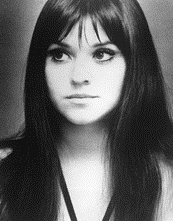
It is 1 am on Saturday August 16th, 1969 and Melanie Safka, a folk singer at the tender age of 22 years old moves herself onto the stage at the Woodstock Music Festival to perform songs echoing love, beauty and freedom.  Following a one-hour performance by Ravi Shankar, playing her music in front of 400,000 flower children would only be one precious moment in her music career.  Three years later and one recording contract later, Melanie Safka would ultimately record two singles that would take her into the mainstream music scene,  “Lay Down (Candles In The Rain)”, which would reach number six on Billboard and “Brand New Key”, which would become number one on the Billboard Hot 100 and become an international bestselling single reaching No. 1 in Canada and Australia and No. 4 on the UK Singles Chart.   


Who knew that over 50 years later, Melanie’s trademark of success and songs would still be relevant and vital to society, she certainly could never have imagined that!  Roll forward to 2021 and Ms. Safka’s journey continues.   The influential singer-songwriter’s legacy now moves forward as she has been nominated for a Lifetime Achievement Award given by Folk Alliance International in conjunction with the 2021 International Folk Music Awards.   Influential and inspiring, this Award will be given to one individual with competition stemming from key influencers both living and those in legacy.  The award, voted on by members of the Folk Alliance International is given and recognized by folk music industry leaders, legends, unsung heroes, and rising talent.  Although the award has not been won as of yet, the sheer magnitude of being nominated is a testament to Melanie’s longevity and success as a singer-songwriter. 

More information about the award can be found at:
Announcing the nominees for the 2021 International Folk Music Awards - Folk Alliance International 

To celebrate the revitalized success Melanie is having, there will be a livestream concert event on January 30th and you can join the concert through the following link:
https://www.facebook.com/events/340082417061967


conversation

ABOUT MELANIE:

Melanie landed in the New York City music and radio scene in the late 1960’s. Her first single, Beautiful People immediately became a turntable hit. Her first tour began with an impressive 40-day run of shows at Paris’world-famous L’Olympia Theater at the invitation of Bruno Coquatrix.  In the years to come, she would entertain millions: at an Aquarian Exposition (the 1969 Woodstock Music Festival), at Carnegie Hall, the Isle of Wight and Glastonbury music festivals, the Sydney Opera House, the South Korean DMZ, the Theatre Royal Drury Lane, the Royal Albert Hall, and many many more theatres, halls, and beloved music clubs around the globe.

Melanie launched Neighborhood Records, making her the first American woman to open a mainstream record label, she has recorded over 20 chart hits and many have been re-recorded.  Melanie received an Emmy after composing lyrics for the theme song of the hit television series Beauty and the Beast.  “What Have They Done To My Song Ma” was re-recorded by Ray Charles with the Count Basie Band.  Nina Simone delivered a remarkable rendition as well.  “(Lay Down) Candles in the Rain” was re-recorded by Mott the Hoople on their 1971 album Wildlife.  Meredith Brooks and Queen Latifah later recorded the anthem.  “Some Say (I Got Devil)”was re-recorded by Smith’s frontman Morrissey. These are only a few of the many performers who have re-recorded Melanie’s works.   She has always known her calling in life was to entertain.

Audiences have welcomed her to the stage for more than fifty years, and she continues to perform today.

More information about Melanie can be found at the following:

·       Website:   http://www.melaniesafka.com
·       Facebook:  https://www.facebook.com/therealmelaniesafka
·       Instagram:  https://www.instagram.com/p/CF5EEn7JdQP/?igshid=wbiuck74zr1o

Sunday, October 18, 2020

Andrew Hess

 Award-winning Author


Andrew Hess has been recognized as an outstanding writer in the Indie community.  In addition to being awarded the Indie Author Books 2014 Series of the Year for The Phoenix Blade, he always received their 2015 Best Mystery Thriller Author award for that same series.


Andrew Hess has received multiple nominations, as well.  These include Best Male Author, Best Mystery Suspense Author, Book of the Year, as well as 2015 Best Mystery Book for Campus KillerWickedly Devine Divas, The Three Bookateers, and SNSBAH Promotions have all praised his books.


In 2016, Andrew Hess was nominated for the Summer Indie Awards in the following categories:


If you are interested in learning more about Andrew Hess, here are some links to help you connect with him:

WHAT'S NEW FROM ANDREW HESS  - J.M. Northup October 7, 2020
AUTHOR INTERVIEW - ANDREW HESS  - TooFullToWrite November 24, 2016

Wednesday, June 3, 2020

Award-winning Sci-Fi Author ROBERT J SAWYER

My Interview with Robert J Sawyer!


I’m thrilled to interview you today, Robert.  Your titles fascinate me, especially your newrelease, TheOppenheimer Alternative, and I have added them to my to-be-read list.  I look forward to discovering your work as well as the man behind the words!
1.     My interviews always begin with the same revealing question: please, tell us how you’d describe yourself?
Since “the world’s first bionic man” is already taken I’ll go with “Canadian science-fiction writer.”
2.     I’ve met writers who’ve become published authors so they ‘had something to read.’  They claimed there were no relatable books until then.  In turn, I’ve met avid readers whose passion for the written word led them into the art of storytelling themselves.  Still, others fall somewhere in between these examples.  I’d like to learn more about you and where you stand as a writer and reader.
·        What came first for you – the reader or the writer?
o   Not many people get to say this, but it’s honestly true: they were simultaneous for me. The very first science-fiction novel I ever read was called Troubleon Titan by AlanE. Nourse, and it began with an author’s foreword about the joys of being a science-fiction writer. Nourse — who pronounced his last name “Nurse” and had an M.D. degree so was in fact Dr. Nurse — made it sound like so much fun that I knew I wanted to do it myself.
Ø  Did you engage in oral storytelling?
§ In the sense of just spinning yarns in front of an audience, no; one of my great friends, MarieBilodeau, is a master of that — I’ve seen her perform at Canada’s National Arts Centre — but I need a prepared text in front of me. That said, I’ve done many hundreds of public readings, and I — cough, cough — get a lot of praise for those because I do act them out, with gestures and different voices and appropriate accents.
Ø  What, or who, influenced your love of literature?
§ I graduated high school in 1979 — I’ll save your readers the math: that was forty-one years ago. And just yesterday, one of my high-school English teachers, Bill Martyn, called to say hi, which is remarkable, of course; few, if any of us, are in touch with teachers from that long ago.  But he and my other high-school English teachers really did inspire me, and I’ll forever be grateful to them, and they, to this day, have remained some of my biggest supporters.
·        I know that Arthur C. Clarke is your favorite sci-fi author.  What about his work speaks to you most?  Is it his style, themes – what draws you to him?
o   Clarke, of course, is best known for co-writing the screenplay for 2001:A Space Odyssey. He was firmly grounded in hard science, and a rationalist, as I am, but was also interested in metaphysical questions: where did we come from, why are we here, what does it all mean? I learned from him that science fiction isn’t escapism; rather, it’s a means of engaging with philosophical questions. He also has a wonderfully lyrical prose style, almost never has villains in his books — just good-hearted, bright people trying to make the world or the universe a better place. I find him uplifting to read, and I try to make my works uplifting, too.
·        Are there other authors who have influenced you? If so, who, and why?
o   FrederikPohl, another science-fiction grandmaster. He showed that the most important thing in writing characters is getting to the psychological truth of who they are. They don’t have to be likable; they simply have to be real. It’s a lesson some genre writers, with their white-hat heroes and their black-hat villains never learn.
o   Most of all, though, H.G.Wells, the grandfather of English-language science fiction. He knew that his newfangled mode of storytelling could be a powerful tool for social and political commentary through the use of mask and metaphors—which is precisely what I try to do with my own books.
·        Which books have made the greatest impact on you?
Ø  As a reader?
§ HarperLee’s ToKill a Mockingbird. As I answer your questions, thirty — thirty! — cities in the United States have rioting in them over racial injustice, so her book is every bit as timely today, sad to say, as it was when it came out sixty years ago. She set out to do what good science fiction also tries to do: suck you in with a story apparently about one thing — in her case, about the summertime adventures of three kids in the Deep South — and thereby get you to think about something important and profound.
Ø  As a writer?
§ TheMaking of Star Trek by StephenE. Whitfield and GeneRoddenberry, the first-ever “Making of” book.  I first read it when I was twelve or so, and it was a fascinating look at the creative process — at the layers of thought and research that are behind every little detail one sees in the finished product.
Ø  As a person, in general – shaping your mind and ideology?
§ That one changes from year to year, but right now I’ll say TheRighteous Mind: Why Good People are Divided by Politics and Religion. The author is JonathanHaidt — which is funny, of course, because it’s pronounced “hate” and he’s really talking about not hating — and his premise is that liberals and conservatives have fundamentally different but equally valid moral frameworks, and if you don’t seek to understand the other side — whichever one is the other from your point of view — you are failing as a human being. It’s changed the way I engage with others, especially on social media but also in real life, too.
3.     Like many sci-fi writers, you have an appreciation of StarTrek.  What I find unique about you is that your influence surpassed the usual trekkie and originated from a writer’s point of view.  Not only did you have limited exposure to the show in its original airing, but, as you said above, you actually found your draw to it through a unique book, TheMaking of Star Trek.  I’d like this section to address this topic.
·        I read that the first episode you ever saw was ‘TheDevil in the Dark,’ and though you didn’t watch much after that due to restrictions in your household, you did find the book.  So, I am curious to know, was it really the show or the book that made you a fan?
o   Well, the big restriction was my bedtime! But it was definitely the show itself that captured my imagination. Predating by decades my exposure to JonathanHaidt, whom I discussed above, I was fascinated, even as a kid, by StarTreks constant messaging that the person you think of as a villain isn’t necessarily a bad guy. Almost every childhood fairy tale or game — think of cops and robbers — has a good guy and a bad guy. But right from that first episode, ‘The Devil in the Dark,’ I got the StarTrek message that most fights are misunderstandings, that being a pacifist is at least as noble as being a soldier, and that communication is the key to understanding.
Ø  What captured your interest in the television series?
§ Optimism: the view of a future that was better than today, and of a humanity is striving to overcome its violent past. SethMacFarlane — he of TheOrville and FamilyGuy fame — has this as his favorite StarTrek quote, from Kirk: ‘We’re human beings with the blood of a million savage years on our hands, but we can stop it. We can admit that we’re killers, but we’re not going to kill. That’s all it takes: knowing that we’re not going to kill today.” My favorite is similar, and it’s Kirk speaking of a role we Canadians hold dear, that of peacekeepers: “They were humanitarians and statesmen, and they had a dream — a dream that became a reality and spread throughout the stars, a dream that made Mr. Spock and me brothers.’
·        I read you said that not only did the original series influence you to be a sci-fi writer, but it taught you to be a better person.  Can you elaborate on that, please? 
o   Here is everything any person needs to know about life, in one short scene from Star Trek’s very firstseason, in 1966, back when the United States was segregated, when women were denied many job opportunities, and so on. A crewman, basically drunk, has taken over control of the ship and is singing irritatingly and incessantly over the intercom system. Captain Kirk — white, male, large, in charge — goes over to the station of Communications OfficerUhura — black, female, small, subordinate — and, looming over her, shouts, “At least try cutting him off!” And Uhura snaps at him, “Sir, if I could cut him off, don’t you think I would?” A beat — a second, where they each reflect on their relative positions and power — and Kirk apologizes to her. That’s an important lesson in 2020 — just imagine the impact it had on TV viewers in 1966!
·        You’ve said you learned to write from watching Star Trek.  Why do you believe this?  What did it teach you?
o   First, have a theme — have something to say. That’s what differentiated Star Trek from most other TV; it was about something. Second, let your characters disagree amongst themselves, and, in that disagreement, dramatize all sides of an issue. Third, forget all this garbage about A-plots, and B-plots, and C-plots that are so common in superficial writing. If you’re going to tell a story, do a deep dive. Dig in and tell that one story; don’t keep cutting away to some soap-opera subplot because you really aren’t writer enough to engage with the actual issues your main plot is about. Later Star Trek series, sadly, moved away from this last point, but it’s the core of the original series.
·        Screen writing is a different art than writing a book.  However, world-building is the same.  How did the show and book help you to understand this process and implement it into your own work?  Did they essentially teach you the same things, or did you find unique perspectives from the two mediums?
o   The show, of course, gave you the end product — but even in that you can see the worldbuilding. “The United Federation of Planets” isn’t really anything more than just a phrase in the show, but it implies so much. And, although you never see Earth in the original Star Trek, you hear it’s “united,” as well — one word that tells you we finally learned to get along. 
o   The making-of book, with its excerpts from production memos and reminiscences by show creator GeneRoddenberry, shows you how that process works: if you say x, it implies y.
4.     I have read from several sources that LocusMagazine’s Index has you listed as the highest global award wins as a sci-fi/fantasy novelist.  Though you have been nominated for and won many awards, you’re only one of eight writers to win all three of the top awards in the genre of Science Fiction: The Nebula Awardin 1995, theHugo Award in 2003, and the John W. CampbellMemorial Award in 2006. In addition, you are the only Canadian author to have accomplished this to date.  How does it make you feel to know you’ve literally written history?
Pretty good, thanks! Those three awards represent three very different groups: the Nebula is voted on by other writers; the Hugo, by readers; and the Campbell by academics and critics. Few writers can satisfy one of those audiences; to have earned respect from all three has made all the sacrifices one makes when choosing a career in the arts worthwhile.
5.     As I cannot think of a better person to offer guidance to a novice author, particularly in the science fiction/fantasy genre, I’d like to focus this next set of questions on your journey to becoming a published author and what advice you have to give.
·        You are a writer without being a published author.  Why did you decide to have your work published?
o   Actually, I may well be the worst person to ask. I sold my first short story forty years ago and my first novel thirty years ago — the field has changed a lot in that time. But as for why to get published, as opposed to just doing the work for yourself or a small group, it comes back to what I said earlier: I had things I wanted to say and that I felt the world needed to hear. For instance, my first novel came out when Ronald Reagan was pushing the snake oil of the StrategicDefense Initiative, or “Star Wars,” something that couldn’t possibly do what it was being touted as being capable of: working flawlessly the very first time to totally shield the US from a Soviet attack. So I wrote GoldenFleece to highlight the inherent bugginess of software and the folly of trusting our future to military computers rather than human diplomacy.
Ø  What are your thoughts on the query letter, and do you still need to write one when you are pitching a new book?
§ You definitely need a short-and-sweet description. Some editors are only interested in literary science fiction, others in military science fiction, still others in light and fluffy stuff. You need to make sure your manuscript is being read by someone who likes the sort of thing you’re writing. Beyond that, though, the story should stand on its own.
·        How did you become a published author?
o   I think this is still the way most people do it, and it certainly worked for me: I started out writing short fiction — science fiction has always had a vigorous short-story marketplace — and got some credits there. I used those to query a top agent, who took me on, and he (Richard Curtis) sold my first book for me.
Ø  What do you think of the Indie movement?  How do you think the flexibility of publishing has affected the industry?
§ For sure. There’s tons of great independently published fiction out there, and kilotons of independently published crap. The problem is separating the tiny amount of wheat from the huge amount of chaff, and of being discovered by readers.  But traditionalpublishers have gotten lazier and lazier — they do almost no promotional work on their own anymore, offloading it onto their authors, and the number of bookstore accounts they serve has dwindled enormously — and they’ve gotten greedier and greedier, wanting way more than a fair share of ebook royalties, and a piece of things they traditionally had no stake in such as audiobooks.
Ø  Do you recommend budding writers to seek literary agents, small presses, or Indie avenues for publication?  Why, or why not?
§ If, and only if, you’re book can win at the usual — stupid, but usual — publishing game of “it’s this meets that” or “it’s another XXXX,” then traditional publishing is for you: “It’s HarryPotter meets X-Men,” or “It’s the next Dune.” Otherwise, the machinery of traditional publishing, which is based on only your editor, and sometimes not even that person, actually reading your book, and everyone else — the art director, the sales force, etc. — relying only on that simplistic comparison, will fail you completely.
Ø  Where do you see the industry headed?
§ More self-publishing, more electronic publishing, and more consolidation among print publishers — we’re down to fivebig New York houses, and soon it’ll be four, then three ...
·        What, if anything, would you change about your career if you could, and why?
o   I’d never have written anything just for the money. I did some media and gaming work, and contemplated some tie-in book writing related to TV and film properties, solely for the bucks. In the end, those weren’t the things that paid off — it was my own intellectual property, the things I was passionate about, and the things I alone owned the copyright in that mattered.
·        What do you feel are the downfalls of publishing?
o   Someone once asked me what the collective noun for writers is (just as a group of crows is called a muder); my reply: a poverty of writers. Pretty much says it all. I’ve done well, but that has a hell of a lot of luck in it. I’ve never met a poor publisher — the person at the top of any large publishing house — but the industry is built on the passion of overworked and underpaid people who do it out of love: writers, editors, booksellers. And publishers and the rich owners of bookstore chains take full advantage of that.
Ø  Do you have control of your edits, covers, blurbs, or promotions?
§ Sure; all authors have the right to accept or reject editorial suggestions. If it’s a big issue, the publisher may show you the door if you won’t play ball, and that’s fine. I walked away from a division of Penguin over the editing of one novel — and won the Nebula Award for the same book published by HarperCollins verbatim as I’d written it. And good at blurbs, etc., so my publishers have long let me write my own. On covers, I always get consultation and sometimes get approval, but even with just the former, I’ve had publishers kindly scrap cover designs not once but twice that I wasn’t happy with and redo them from scratch.
§ Most authors have way more clout than they think they do: asking politely goes a long, long way.
Ø  I have had traditionally published authors tell me that reviews don’t affect them.  Whereas, they can determine the visibility and promotability for an Indie author.  How do you feel; do reviews matter?  Why, or why not?
§ They matter to sales, absolutely, and Amazon selects books to promote based on the number of user reviews and BookBub won’t let you run a deal with them if you don’t have a lot of user reviews.
§ Prior to publication, I have lots of beta readers — over fifty people read and commented on TheOppenheimer Alternative before it was published — and I know precisely what the ereviews will say, good and bad, long before the book comes out, and so the actual reviews are of no interest to me, except as marketing tools. Those things they praise were by design — and those things they didn’t like were by design, too, and I simply disagree with the reviewer. Remember, most user reviews — and way too many professional ones — conflate “not to my taste” with “with not any good.”
·        What do you think is the best aspects of being a published author?
o   Making something out of absolutely nothing. A sculptor has clay; a painter has canvas; an inventor has nuts and bolts. But a writer? You’ve brought something into existence out of thin air that can change minds and move hearts. It’s magic.
6.     What can we expect to see from you over the coming year?
Not a blessed thing! It took me four years to write TheOppenheimer Alternative, and my next book will take years, too. Let’s chat again around about 2024!
·        What is your current WIP?
o   I’m doing research for a novel that would be in the same vein as my new one, TheOppenheimer Alternative: a hard science-fiction philosophically rich book set in the past. But this time the past is the 1800s and the larger-than-life real characters aren’t physicists but the Wild West frontier pioneers of dinosaurian paleontology.
·        What’s the best way for readers to connect with you and your books?
o   Visit my website at https://sfwriter.com and come join the conversations on my persona Facebook wall; I’m RobertJ. Sawyer over there.  
Thanks again for taking the time to meet with me.  It is truly an honor to meet someone of your esteem.  I could go on and on about your accomplishments, but really, I just want to wish you best in all things.  Stay safe and healthy!

NORNS TRIAD PUBLICATIONS' BLOG